

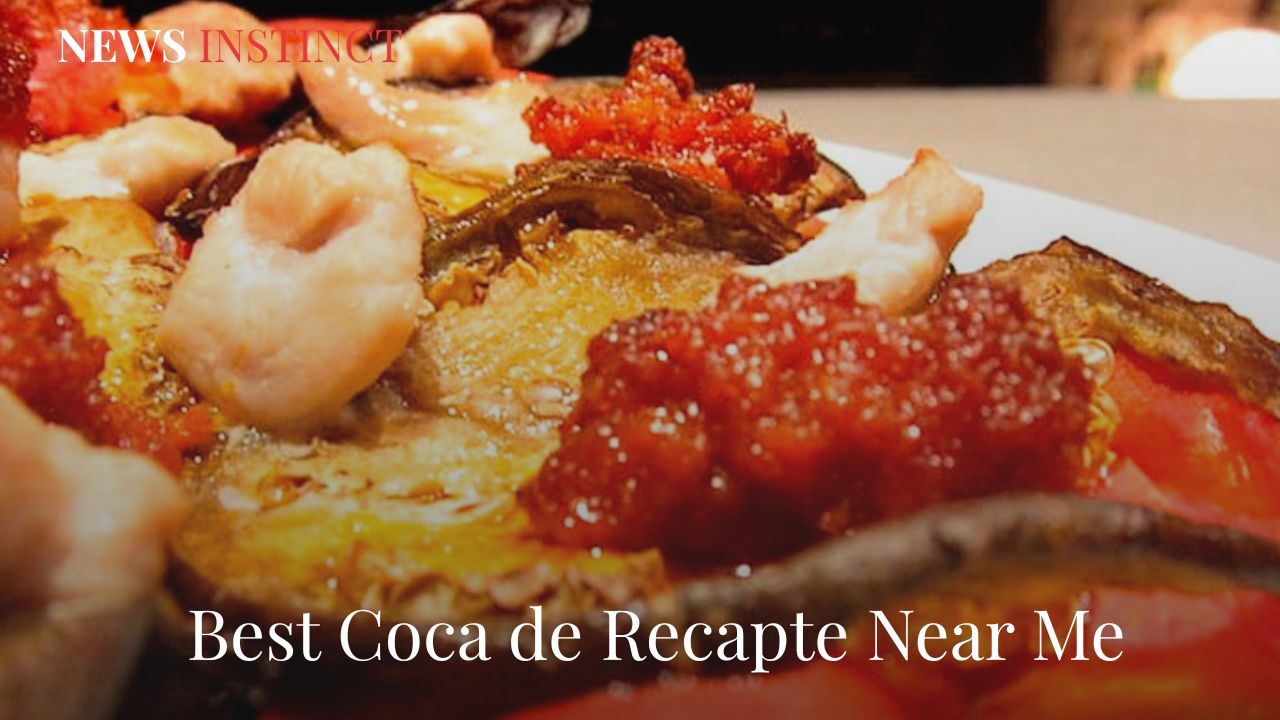
You’ve probably seen it on a travel blog, in a food reel from Barcelona, or on a friend’s holiday snaps: a long, rectangular flatbread covered in glossy roasted peppers, charred aubergine, and a drizzle of olive oil. That’s coca de recapte, and searching for the best coca de recapte near me is becoming one of the more interesting food quests you can take on in 2026. The problem? This isn’t pizza. You won’t find it on every high street. And most places that serve it don’t even call it by name.
This guide breaks down what coca de recapte actually is, where you’re most likely to find it near you, how to spot an authentic version, and how to make one yourself if local options fall short.
What Is Best Coca de Recapte Near Me & Why Should You Care?
Coca de recapte is a traditional savoury flatbread from Catalonia, the northeastern region of Spain. It’s the most common coca variety sold in Catalan bakeries, made with a thin bread dough base topped with roasted vegetables, particularly the preparation known as escalivada: aubergine, red peppers, onions, and tomatoes, all roasted until soft and slightly charred.
The word “coca” comes from the Old Dutch koek (sharing roots with the English “cake” and German “Kuchen”), according to food writer Elisabet Juan Roca. “Recapte” translates roughly as “provisions” or “what you have gathered.” This was originally a practical dish: families in rural Catalonia who didn’t own ovens would carry their seasonal produce to the village baker, who’d spread it over leftover bread dough. The result was a shared, communal meal built from whatever the fields offered that week.
The Smithsonian Folklife Festival featured coca de recapte when showcasing Catalan baker Àngel Zamora of La Fogaina in La Vall d’en Bas, describing it as a cornerstone of Catalan bread culture alongside the sweet coca de forner.
If pizza is loud, coca de recapte is confident and quiet. There’s no tomato sauce. Cheese is rare. The dough is thinner and crispier than a typical pizza base. The whole thing relies on the quality of the roasted vegetables and the olive oil holding everything together.
Best Coca de Recapte Near Me: Where to Actually Find It
Let’s be direct: if you’re outside Spain, finding a restaurant or bakery that lists “coca de recapte” on the menu is uncommon. The dish doesn’t have the global name recognition of pizza, focaccia, or even pissaladière. But that doesn’t mean you can’t find it. You just need to know where to look.
Catalan and Spanish Restaurants
Your best starting point for finding the best coca de recapte near me is a Spanish restaurant that specialises in Catalan cooking. In London, The Campaner in Chelsea is a dedicated Catalan restaurant with Barcelona style cooking and open fire techniques. Barrafina, which has branches across the city, is known for serving authentic Catalan tapas under head chef Antonio Gonzales Milla, according to The Nudge London. Sabor in Mayfair, led by Nieves Barragán Mohacho, serves regional Spanish dishes that rotate seasonally.
Outside London, look for independent Spanish tapas bars in cities like Manchester, Edinburgh, and Bristol. Not every one will have coca on the menu, but restaurants that emphasise regional Catalan cooking, seasonal vegetables, and wood oven baking are far more likely to offer it or something very close to it.
Mediterranean Bakeries
In Catalonia itself, coca de recapte is primarily bakery food. According to Directo al Paladar, Catalan bakeries treat it as one of their first daily products because it doesn’t require a fully preheated oven. Look for Mediterranean or artisan bakeries near you that bake Spanish style breads and flatbreads. If they understand Catalan baking traditions, they’ll likely know what coca de recapte is, even if it’s not in the display case every day. Ask about it directly.
Tapas Bars and Wine Bars
Tapas bars that serve small plates alongside sherry or cava sometimes include coca de recapte as a sharing dish. Coca pairs particularly well with a dry sparkling wine. Spain’s official tourism guidance specifically suggests Penedès cava as a classic match. Wine bars that stock Spanish wines may serve it as a food pairing option.
Food Markets and Festivals
Borough Market in London, as well as international food festivals, occasionally feature Spanish artisan producers. Keep an eye out for pop up stalls selling Catalan baked goods. If you’re willing to travel, the Firacóc festival in Tàrrega, Lleida holds its annual Aplec del Cóc every May during the town’s Festa Major. The 38th edition took place on 16 and 17 May 2026, attracting around twenty exhibitors from bakeries and ovens across the Lleida region. Tàrrega’s mayor, Rosa Maria Perelló, described the cóc as the town’s most emblematic food product, according to Ràdio Tàrrega.
How to Identify the Best Coca de Recapte Near Me
Not all cocas are created equal. If you do find one on a menu or in a bakery display, here’s what separates a good version from a forgettable one.
The Dough
The base should be thin, golden brown, and crisp underneath while still being slightly tender inside. It’s typically rectangular or oval, not round. A good coca base should hold its toppings without going soggy. If the dough is thick, soft, and chewy like pizza, it’s not the real thing. According to Bake Street, the dough benefits from high hydration and a long, slow fermentation of 16 to 18 hours, and works best with strong flour such as Manitoba.
The Toppings
The classic topping is escalivada: roasted red peppers and aubergine, often with onion and tomato. The vegetables should look properly roasted, with some caramelisation and slight charring at the edges. They shouldn’t appear raw, steamed, or swimming in liquid. Beyond the vegetarian base, traditional versions from coastal Catalonia add sardines, anchovies (arengades), or tuna. Inland versions lean toward butifarra (Catalan sausage), longaniza, or pork loin.
Pastisseria Brunells in Barcelona’s Carrer de la Princesa won a competition at the Origens fair in Olot for their coca de recapte, which featured traditional bread, aubergine, butifarra de Perol, and a finishing touch of ricotta and chives, according to Metrópoli Barcelona.
The Olive Oil
Quality olive oil is non negotiable. It should be visible and aromatic, not greasy. Extra virgin olive oil gives the best result and is standard in any traditional recipe.
The Absence of Cheese
This trips people up. Coca de recapte is not pizza. Cheese is not a traditional topping and adding it changes the character of the dish entirely. If a restaurant buries the coca under mozzarella, that’s a sign they don’t understand what they’re making.
Best Coca de Recapte Near Me: Regional Variations Worth Knowing
Coca de recapte isn’t a single fixed recipe. It changes with geography and season, which is part of its appeal. According to sources from across Catalonia, the main regional variations include:
| Variation | Region | Key Toppings |
|---|---|---|
| Escalivada (classic) | Throughout Catalonia | Roasted peppers, aubergine, onion, tomato |
| Arengada (herring) | Coastal areas, Tarragona | Escalivada with salted herring or sardines |
| Butifarra | Inland Lleida, Urgell | Escalivada with Catalan sausage |
| Longaniza | Urgell, La Segarra | Escalivada with cured pork sausage |
| Tuna and anchovy | Barcelona, coastal towns | Escalivada with tinned tuna, anchovies, olives |
| Spinach and pine nuts | Barcelona | Sautéed spinach with pine nuts, sometimes anchovies |
| Samfaina | Terra Alta, Tarragona | Courgette, pepper, and tomato stew base |
The Lleida and Tarragona regions are considered the heartland of coca de recapte. Locals there often claim the dish was invented in their area, and annual festivals like the Firacóc in Tàrrega celebrate dozens of artisan variations each year.
How to Make Coca de Recapte at Home
If finding the best coca de recapte near me proves difficult, making it yourself is entirely realistic. The dish is simpler than most bread recipes, and you probably have most of the ingredients already.
Ingredients (Serves 4)
For the dough: 500g strong bread flour, 325ml warm water, 10ml olive oil, 7g dried yeast, 8g salt
For the topping: 2 red peppers, 1 large aubergine, 1 large onion, 2 ripe tomatoes, extra virgin olive oil, flaky sea salt, fresh rosemary (optional)
Optional protein toppings: Tinned sardines or anchovies, butifarra sausage sliced thinly, or marinated white anchovies
Method
- Mix the flour and salt in a large bowl. Dissolve the yeast in the warm water, then add the olive oil. Pour the liquid into the flour and mix until combined. You don’t need to knead extensively. Cover with a tea towel and leave to rise for at least 4 hours, or overnight in the fridge for better flavour (the Bake Street recipe recommends 16 to 18 hours).
- Roast the vegetables. Cut the peppers in half and deseed them. Halve the aubergine lengthways. Place them cut side down on a baking tray with the whole onion and tomatoes. Drizzle with olive oil and roast at 200°C for 30 to 40 minutes until soft and charred. Peel the skins off the peppers and aubergine once cool enough to handle. Slice everything into strips.
- Preheat your oven to its maximum temperature, ideally 250°C or higher. If you have a pizza stone, heat it in the oven for at least 30 minutes.
- Stretch the dough on a floured surface into a thin rectangle, roughly 35cm by 17cm. Don’t use a rolling pin too aggressively; let the dough relax for a few minutes if it springs back. Roll the edges up slightly to create a rim that holds the juices in.
- Arrange the roasted vegetables over the dough. Add your protein topping if using. Drizzle generously with olive oil and sprinkle with sea salt and rosemary.
- Bake for 10 to 12 minutes until the base is golden and crisp and the vegetables have a touch more colour. Let it cool on a wire rack for a few minutes before serving.
Coca de recapte tastes excellent at room temperature and many Catalans actually prefer it the next day, when the roasted vegetable flavours deepen overnight.
What to Serve with Coca de Recapte
Coca de recapte works as a starter, a main course, or cut into small pieces for sharing. The traditional pairing is a glass of cava from the Penedès region of Catalonia. A crisp, dry white wine or a light rosé also works well. For a full Catalan spread, serve it alongside a dish of marinated olives, a simple green salad dressed with sherry vinegar, and a plate of Manchego or Garrotxa cheese and they also serves Best Sonso Yuca Near Me.
Best Coca de Recapte Near Me: Tips for Ordering and Searching
If you’re searching online for the best coca de recapte near me, keep in mind that many restaurants won’t use the Catalan name. Try these alternative search terms:
- “Catalan flatbread” or “Spanish flatbread”
- “Escalivada flatbread” or “escalivada coca”
- “Mediterranean vegetable flatbread”
- “Spanish bakery” plus your city name
When you find a place that looks promising, call ahead or check the menu online. Ask specifically whether they serve coca or any Catalan flatbread with roasted vegetables. Many chefs who understand the dish will be happy to prepare it on request, even if it’s not a standard menu item.
FAQ’S About Best Coca de Recapte Near Me
1. Is coca de recapte the same as pizza?
No. Coca de recapte uses a thinner, crispier dough, relies on roasted vegetables and olive oil rather than tomato sauce and cheese, and is typically rectangular. It’s a distinct dish from Catalonia with its own history and preparation method.
2. Can you eat coca de recapte cold?
Yes. According to TasteAtlas, coca de recapte is traditionally eaten cold. The name itself references portable provisions, and the dish was historically carried as a picnic food. Many people find the flavours improve after sitting for several hours.
3. Is coca de recapte vegan?
The classic escalivada version with just roasted vegetables and olive oil is vegan. Many traditional variations include fish (sardines, anchovies, herring) or meat (butifarra sausage), so check the specific toppings if you need a plant based option.
4. Where did coca de recapte originate?
The dish is native to Catalonia in northeastern Spain, with the Tarragona and Lleida regions often cited as its historical heartland. The tradition dates back centuries to when villagers would bring their seasonal produce to the communal village bakery.
5. What’s the best time to buy coca de recapte from a bakery?
Late morning to early afternoon is usually best. In Catalonia, bakeries often bake coca as one of their first items because it doesn’t need a very hot oven. Buying earlier in the day means a fresher product.
Your search for the best coca de recapte near me might not lead you straight to a bakery counter stacked with them (unless you’re in Catalonia). But it will lead you toward a genuinely rewarding corner of Mediterranean food. Whether you track down a Catalan restaurant that serves it, discover a local baker willing to make it, or fire up your own oven and build one from scratch, coca de recapte rewards the effort. It’s honest, seasonal food with centuries of history behind it, and it deserves to be better known outside Spain.