

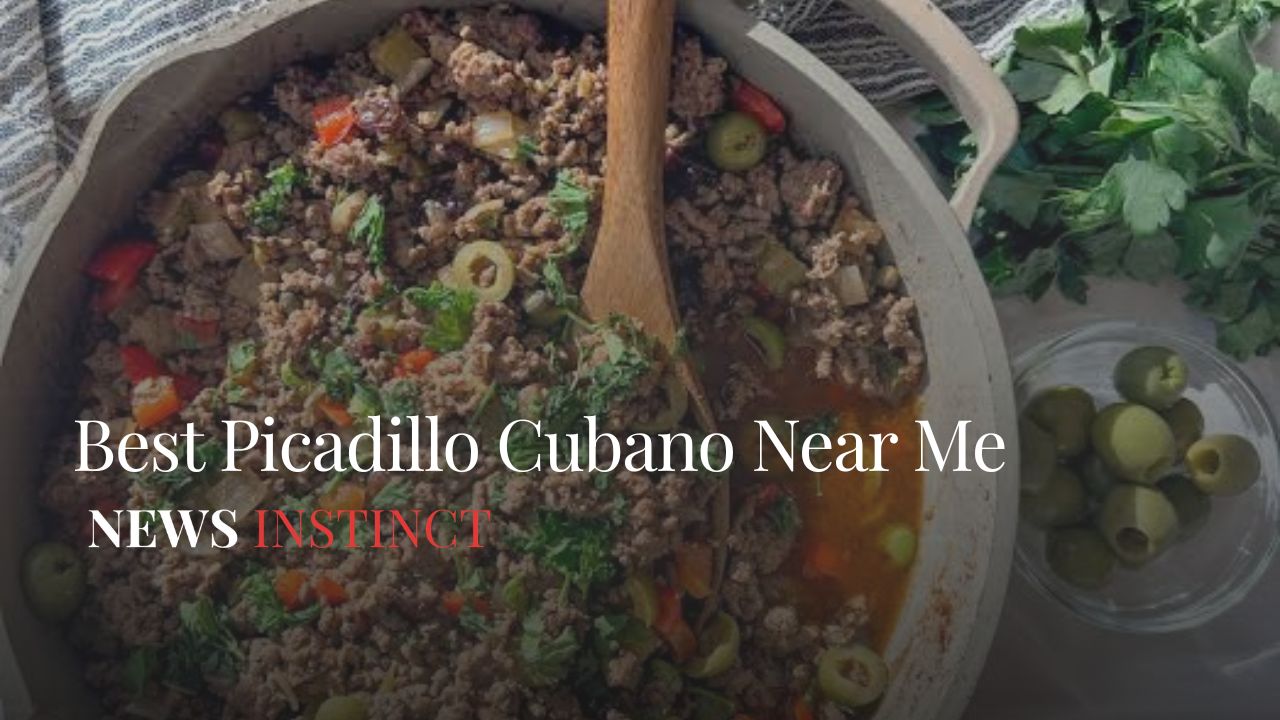
If you’ve been searching for the best picadillo cubano near me, you already know the craving is specific. It’s not just a beef dish. The UK’s Cuban restaurant scene is small but genuinely passionate, and locating a plate of proper picadillo requires knowing what to look for, which venues are actually cooking it, and how to tell the real thing from a watered-down Latin-inspired approximation. This guide covers all of it.
What Makes Picadillo Cubano Different
The Cuban version is distinct from its Mexican or Filipino counterparts in a few specific ways. Like most Cuban dishes, Cuban picadillo uses a sofrito base of onions, peppers, and garlic sautéed in olive oil. Other picadillo ingredients include tomato sauce, cooking wine (vino seco), cumin, and oregano. The sofrito is not optional it’s the identity of the dish. Think of it the way a French cook thinks about mirepoix: you don’t skip it, and you don’t rush it.
One area where you’ll find genuine disagreement among Cuban cooks concerns raisins. You can add them if you want and it is still delicious, but it’s not considered authentic. Many recipes written outside Cuba do include raisins, so don’t be surprised to see both versions on menus and food blogs just know you’re encountering an Americanised interpretation when they appear.
Potatoes also split opinion. The potatoes are optional. Usually, the picadillo is made without potatoes when it’s being used as a filling, such as in empanadas or pasteles. As a standalone main dish with rice and beans, you may find them included for extra body and texture and it works well either way. Must Try Best Empanada de Espinaca Near Me
Classic Plate What Should Come With It
These sides complete the full Cuban comfort-food experience: white rice, black beans, and fried plantains. The rice should be fluffy and plain, acting as a neutral base to absorb the rich tomato and olive-forward sauce.
Black beans, ideally cooked from scratch with garlic and bay leaf, bring earthiness. Fried plantains either tostones (twice-fried green plantain) or maduros (sweet, caramelised ripe plantain) round the plate off with contrast. Any restaurant that serves picadillo alongside generic Spanish rice or skips the beans entirely is cutting corners.
Finding Authentic Picadillo Cubano in the UK: A Realistic Picture
That means your first step isn’t Google Maps. Your first step is understanding which category of venue you’re walking into.
There are three broad types of Cuban-branded restaurants operating in the UK:
Authentic Cuban kitchens small, often family-run, built around traditional recipes passed down from Cuban-born cooks. These are rare but real. They’re where picadillo cubano, ropa vieja, and lechon asado are prepared with genuine intent.
Cuban-inspired bars with food places where the cocktail list drives footfall and the kitchen serves Latin-adjacent tapas. Some do Cuban classics well; many treat them as an afterthought.
Latin American fusion spots restaurants covering Mexican, Brazilian, Colombian, and Cuban food under one roof. They may do a version of picadillo, but it’ll often be a hybrid recipe rather than a dish anyone in Havana would recognise.
UK Cities With a Cuban Food Scene
London
Escudo de Cuba, Dalston (East London) is widely regarded as one of the closest things to an authentic Cuban kitchen in the capital. After 20 successful years running the acclaimed Cuba Libre in Islington, the award-winning team made the move to Dalston, serving a range of traditional Cuban dishes including tapas-style small plates at 20 Stoke Newington Road, N16 7XN. The venue holds a 4.5 rating on Google and over 1,600 reviews on Restaurant Guru. Menu offerings rotate, so it’s worth calling ahead to confirm picadillo is available before you travel.
Bar La Rampa, Fitzrovia opened to considerable attention for its recreation of 1950s Havana atmosphere and has earned a following for its Cuban kitchen credentials. Guests can enjoy dishes like the Cubano sandwich served with pork belly, ham, and raclette cheese, as well as picadillo empanadas which means the kitchen is actively working with picadillo as an ingredient, a good sign for its quality. The cocktail programme there was designed by award-winning bartender Marcis Dzelzainis.
Cubana, Waterloo at 48 Lower Marsh, SE1, is one of London’s longest-running Cuban restaurants and the place which introduced mojitos to the UK in the 1990s. The menu describes a sultry mix of Spanish, African, Caribbean, and French influences, using free-range chicken, pork, and eggs from UK family farms alongside organic chorizo from Spain. The Smithfield branch has now closed following a landlord redevelopment, but Waterloo remains open seven days a week. Their food leans toward a broader Latin-American offering, but the kitchen’s provenance is solidly Cuban.
Revolución de Cuba operates across multiple UK cities including London, Manchester, and Birmingham. It’s a bar-forward brand with a bold and modern take on traditional Creole dining that pays homage to Cuban, Caribbean, and South American food which is an honest description of what it is. Don’t go expecting grandmother’s picadillo, but the kitchen produces decent Latin comfort food and the atmosphere is lively.
Bristol
Bristol punches above its weight for Cuban food in the UK. There are four authentic Cuban food businesses operating or doing pop-ups in Bristol, making those in the city particularly fortunate.
Café Cuba is possibly the oldest family-run Cuban restaurant in Bristol and the UK still in operation, opened by business partners David and Osvaldo, the second being from the Morales family. Classic Cuban plates like Ropa Vieja, Pollo al Ajillo, and Garbanzos are part of the extensive menu, alongside the usual sides like yuca con mojo, tostones, and maduros fritos. A kitchen cooking at that level of classical Cuban tradition is almost certainly working with picadillo, either as a main or as a filling for pastries. Dish Cult
Morales Café is the newest addition to Bristol’s Cuban food scene, run by sisters Omara and Ana who prepare Cuban and Latin dishes from an open kitchen, with classic dishes like tostones, roast pork, yuca frita, empanadas, and flan.
If you’re outside London and looking for the best picadillo cubano near you, Bristol is genuinely worth the trip for Cuban food lovers.
How to Actually Search for Picadillo Cubano Near You
The phrase “best picadillo cubano near me” is a reasonable starting point for a Google search, but it doesn’t always surface the most accurate results. Here’s how to get more from your search.
Search specifically for the dish, not the cuisine. Type “picadillo cubano” alongside your city or postcode, rather than just “Cuban restaurant near me.” Many authentic spots don’t show up highly in generic cuisine searches but will appear when you search for a specific dish they’re known for.
Check Google Maps reviews for dish mentions. Once you’ve found a venue, search the reviews for the word “picadillo.” If diners are mentioning it by name and describing it positively, that’s a strong signal the kitchen takes it seriously. Reviews that praise “the rice and beans” or “the mains” without naming specific dishes are less useful.
Use Yelp for photo-led research. Exploring user-generated reviews and photos gives a genuine sense of the types of cuisine and dishes popular among locals at any given venue. A restaurant with multiple food photos showing clearly prepared picadillo identifiable by its dark, sauce-rich appearance and visible olives is one where the dish is a regular on the menu.
Check Uber Eats and Deliveroo listings. Cuban restaurants that offer delivery will often list their dishes individually, making it straightforward to confirm picadillo is available without calling ahead. The quality of a delivered picadillo will vary, but it’s a useful way to try a kitchen before committing to a dine-in visit.
Call before you go. This is particularly worth doing at smaller family-run spots. Menus at authentic Cuban restaurants change based on what’s available, what’s in season, and what the kitchen feels like cooking that day. Picadillo may be a daily special rather than a permanent fixture.
What Separates Good Picadillo from the Rest
Not all picadillo is created equal. Not every Cuban restaurant prepares picadillo the same way. Some places make it dry, while others overload it with tomato sauce. Knowing what to look for helps you identify whether a kitchen is cooking it properly.
The ground beef should be lean and well-browned before the tomato sauce goes in. Lean beef works best because you’re building flavour through browning and the other ingredients, and you don’t want the picadillo to become greasy. A plate that arrives sitting in a pool of orange fat has not been made with enough care.
The sofrito matters enormously. Fresh onions, garlic, and peppers make a huge difference the flavour should taste vibrant, not canned or overly processed. If the base tastes flat or generic, the kitchen has either rushed it or used pre-made sofrito from a jar.
The olives should be present but not overwhelming. The olives and raisins (where used) should complement the beef instead of overpowering it. Good picadillo has balance in every bite.
Adding a splash of vinegar right before serving highlights the other flavours without losing the depth built during cooking like turning up the contrast on a photo to make it more vivid and defined. It’s a technique that separates a cook who understands the dish from one who’s following a recipe they found online.
Picadillo is a humble recipe simple ingredients like ground beef, onions, garlic, and peppers that cook together in a tomato sauce and simmer down into something filling and delicious. The best versions you’ll find in UK restaurants achieve exactly that: deceptive simplicity that tastes like somebody’s family put it together. When a reviewer says “this tastes like my abuela’s cooking,” that’s the benchmark.
When You Can’t Find It Near You: Make It at Home
Given that proper Cuban restaurants are geographically limited in the UK, making picadillo at home is a genuinely worthwhile option. The ingredients are accessible at any supermarket, and the dish comes together in under 45 minutes.
Prep time is around 10 minutes, cook time approximately 35 minutes, and the dish serves four to six people. You’ll need lean ground beef, white onion, green bell pepper, garlic, tinned tomatoes or tomato sauce, ground cumin, dried oregano, bay leaves, pitted green olives (with a splash of the brine), and dry white wine or cooking wine. Brown the beef, build the sofrito separately, combine and simmer. The dish holds well in the fridge for three to four days and reheats better than almost any other beef dish the flavours deepen overnight.
UK’s Cuban Food Scene in 2026: Where Things Stand
Cuba’s position as a travel destination remains restricted, which means the UK’s Cuban diaspora community hasn’t grown significantly in recent years. That explains, in part, why Cuban food hasn’t expanded in the UK the way Mexican or Brazilian cuisine has. The restaurants that do it properly tend to be passion projects run by people with a genuine personal connection to the island’s cooking.
That said, there are signs of growing interest. Bar La Rampa’s opening in Fitzrovia attracted coverage from design publications alongside food media, suggesting an appetite for the full Cuban cultural experience not just the mojito. Internationally, Cuban food has started receiving serious fine dining recognition, with Emelina in West Palm Beach becoming the first Cuban restaurant to earn a Michelin star in 2026, suggesting the cuisine is beginning to receive the critical attention it deserves. That kind of recognition tends to raise the profile of a cuisine globally, including in markets like the UK where it remains underrepresented.
For now, if you want the best picadillo cubano near you, your best strategy is a combination of targeted searching, direct contact with the kitchen, and a willingness to travel a little further than you’d normally go for a meal. The dish rewards the effort.
FAQ’S About Best Picadillo Cubano Near Me
1. What is picadillo cubano made of?
Cuban picadillo is made with ground beef simmered in a rich sofrito base of onions, garlic, peppers, and tomatoes, enhanced with green olives, capers, and optionally raisins. Cumin, oregano, bay leaf, and dry white wine are standard seasoning components. It’s traditionally served with white rice, black beans, and fried plantains.
2. Is picadillo cubano the same as Mexican picadillo?
No. Both dishes use minced beef, but they diverge significantly after that. Cuban picadillo relies on a sofrito base and features olives and capers as defining ingredients. Mexican picadillo more commonly uses potatoes and chilli, with a different spice profile. The Cuban version is notably less spicy.
3. Does authentic Cuban picadillo contain raisins?
According to those born and raised in Cuba, authentic Cuban picadillo does not contain raisins, though many non-Cuban recipe writers add them for a sweet dimension. You can add them and the dish remains delicious it just moves away from the traditional preparation.
4. Which UK cities have Cuban restaurants serving picadillo?
London has the most options, including Escudo de Cuba in Dalston, Bar La Rampa in Fitzrovia, and Cubana in Waterloo. Bristol has a surprisingly strong Cuban food scene for its size, with Café Cuba and Morales Café both serving traditional Cuban cooking. Manchester and Birmingham have Revolución de Cuba branches, though these lean more toward Latin bar food than classical Cuban kitchen cooking.
5. What should I look for when ordering picadillo cubano at a restaurant?
A well-made picadillo should taste rich and balanced, never greasy or bland. The meat should be juicy and soft, not tough or oily, and Cuban seasoning should stand out naturally.