

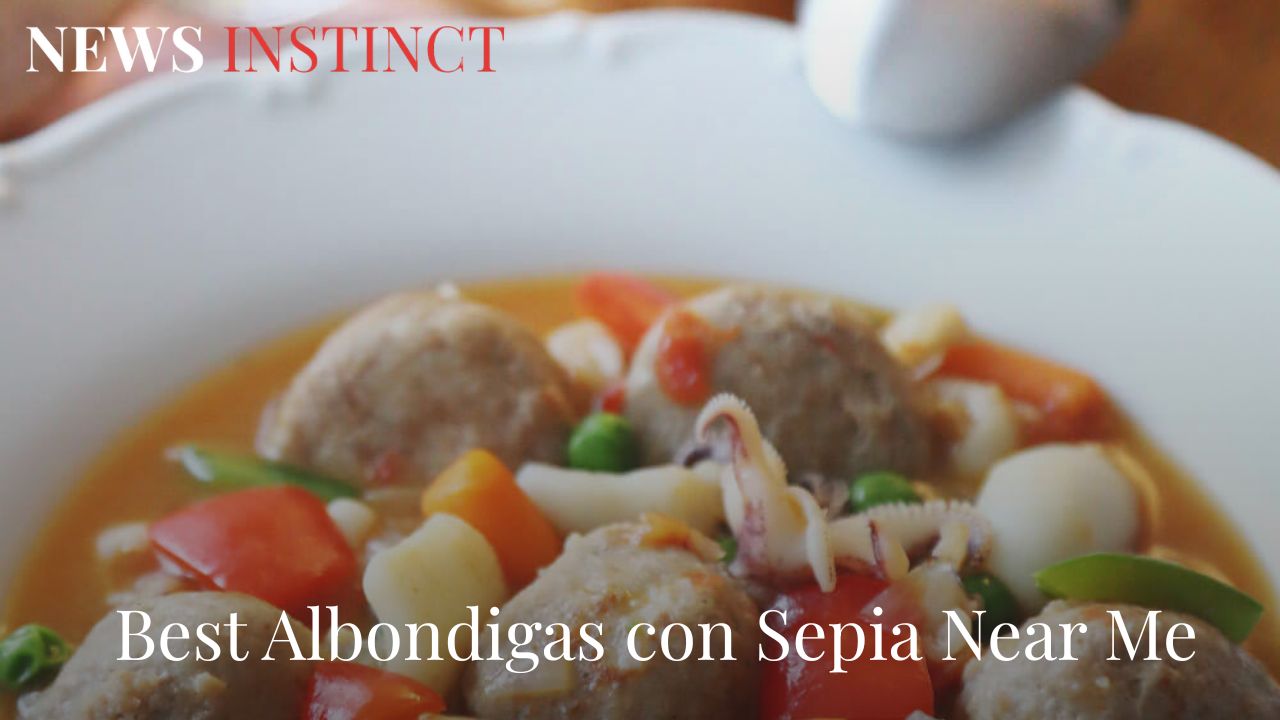
You’re craving something that most restaurant menus don’t even list. Albondigas con sepia sits in that sweet spot of Spanish cooking where tender, herbed meatballs meet soft pieces of cuttlefish in a slow-simmered sauce, and the result is one of the most satisfying things you’ll eat all year. The problem? Searching for the best albondigas con sepia near me can feel like looking for a needle in a haystack, because this isn’t your standard tapas bar dish. It’s a regional specialty with roots in Catalonia’s coastal kitchens, and finding a version that’s properly made takes a bit of know-how.
This guide breaks down everything you need: what albondigas con sepia actually is, why it tastes the way it does, how to tell a great version from a lazy one, and the smartest ways to track it down wherever you are in the UK or beyond.
What Is Albondigas con Sepia and Why Should You Care?
Albondigas con sepia is a traditional Spanish recipe that pairs meatballs (albondigas) with cuttlefish (sepia) in a rich, typically tomato-based sauce. According to Wikipedia’s entry on Catalan cuisine, the dish is listed as one of the defining examples of the mar i muntanya tradition, alongside other surf-and-turf combinations like chicken with lobster (pollastre amb llagosta) and rabbit with crayfish (conill amb escamarlans).
In Catalan, you’ll see it written as mandonguilles amb sípia or pilotilles amb sípia. The concept is simple, but the flavour is anything but. The meatballs bring savoury depth from a blend of pork and beef, seasoned with garlic, parsley, and breadcrumbs. The cuttlefish adds a gentle sweetness and tender, almost silky texture that sits somewhere between squid and octopus. The sauce ties them together, built from a slow-cooked sofregit (the Catalan base of onions, tomato, garlic, and olive oil) and finished with a picada, a pounded paste of fried bread, almonds, garlic, and parsley that thickens and enriches the sauce in its final minutes.
The dish belongs to a culinary philosophy called mar i muntanya, literally “sea and mountain.” According to food historian and chef José Andrés, writing on his Substack in August 2025, this tradition was born from the practical exchange between coastal fishermen and inland farmers in the Empordà region of Catalonia, where the Pyrenees slope down to the Mediterranean. Farmers swapped meat for fish, and the two ended up in the same pot. One of the oldest cookbooks in Europe, the fourteenth-century Catalan Llibre de Sent Soví, references combinations of meats and seafood that laid the groundwork for dishes like this one.
Best Albondigas con Sepia Near Me: How to Actually Find It
Searching “best albondigas con sepia near me” on Google Maps or TripAdvisor will rarely return a direct result, because this is a specialty dish that most restaurants don’t advertise prominently. You’ll need to search smarter and also get Best Tarta de Santiago Near Me.
Look for the Right Type of Restaurant
Generic tapas bars with menus dominated by patatas bravas, sangria, and nachos are unlikely to serve albondigas con sepia. Instead, look for restaurants that describe themselves as Catalan, regional Spanish, or Mediterranean with a focus on seafood. Menus featuring dishes like fideuà, suquet de peix, escalivada, pa amb tomàquet, or arroz negro suggest a kitchen that understands deeper Spanish cooking and may well serve, or be willing to prepare, meatballs with cuttlefish.
In London, restaurants like Barrafina (which Time Out London describes as serving authentic Catalan tapas under head chef Antonio Gonzales Milla) and Sabor (run by Bilbao-born chef Nieves Barragán Mohacho, who earned a Michelin star at her follow-up restaurant Legado within six months of opening) are the kind of establishments where regional Catalan dishes either appear on the menu or rotate as specials. Other cities with strong Spanish dining scenes include Manchester, Edinburgh, Bristol, and Brighton.
Search Terms That Work Better
Instead of only searching “albondigas con sepia near me,” try these variations: Catalan food near me, Spanish meatballs with cuttlefish, mandonguilles amb sípia, authentic tapas near me, or Mediterranean seafood stew near me. Some restaurants serve the dish under different names, and the Catalan spelling won’t appear on every English-language menu.
Ask About Specials
Many traditional Spanish restaurants rotate their menus seasonally. Albondigas con sepia might appear as a weekend special or a chef’s choice rather than a permanent fixture. If you spot a restaurant that clearly takes Spanish cooking seriously, call ahead and ask. A kitchen that makes its own meatballs and sources fresh cuttlefish will usually be happy to talk about it.
Check Reviews Carefully
Star ratings won’t help you here. Instead, search within reviews on Google, TripAdvisor, or OpenTable for specific words: albondigas, sepia, cuttlefish, meatballs in sauce, or Catalan. Pay attention to descriptions of texture and sauce quality, not just the overall score.
How to Spot Great Albondigas con Sepia vs a Poor Version
Not all servings of this dish are equal. Here’s what separates the best albondigas con sepia from a disappointing plate.
Meatballs
The best versions use a blend of pork and beef (or sometimes just pork), mixed with egg, breadcrumbs, finely chopped garlic, and flat-leaf parsley. According to recipe details from Cocinatis, a well-regarded Spanish cooking site, traditional proportions call for about 500g of mince (half veal, half pork), one egg, three tablespoons of breadcrumbs, and a generous handful of parsley. The meatballs should be roughly walnut-sized, lightly dusted in flour, and fried to golden on the outside before being added to the sauce. They finish cooking in the liquid, which keeps them juicy inside. If the meatballs are dense, dry, or taste like they came from a packet, the kitchen cut corners.
Cuttlefish
Fresh cuttlefish (sepia) has a mild, slightly sweet flavour and a tender texture when cooked properly. It should never be rubbery. Spanish Sabores, a widely followed food blog by Lauren Aloise based in Spain, notes that cuttlefish is thicker-fleshed than squid, which makes it better suited to slow stewing. In Andalusian and Catalan preparations, the cuttlefish is usually cut into bite-sized pieces and seared briefly before joining the sauce. If a restaurant substitutes squid for cuttlefish, the dish will still taste good, but the texture won’t be quite the same.
Sauce and the Picada
The sauce starts with a proper sofregit: onions and garlic cooked low and slow in olive oil until caramelised, followed by grated or crushed tomatoes reduced to a deep, concentrated paste. White wine or fish stock is added, and the meatballs and cuttlefish simmer together until the flavours meld.
The finishing touch is a picada, and this is where a great version of the dish announces itself. Traditional recipes call for almonds (sometimes hazelnuts), fried bread, garlic, and parsley, all pounded in a mortar and stirred into the sauce in the last five to ten minutes of cooking. This thickens the sauce, adds a subtle nuttiness, and deepens the overall flavour. As gastronomy writer Eliana Thibaut has noted, the picada and the sofregit are the two techniques that most distinctly define Catalan cooking, and their presence in a dish is a strong sign of authenticity.
Regional Variations of Albondigas con Sepia You Should Know
The dish takes different forms across Spain, and understanding these variations can help you know what to expect.
Catalan (Mandonguilles amb Sípia)
The classic version from the Costa Brava and Barcelona area. Meatballs of pork and beef, cuttlefish pieces, a tomato-based sauce with a picada of almonds, fried bread, and garlic. Often served with white rice or fried potatoes. According to a Catalan tourism guide, this is one of the most recognised mar i muntanya dishes in the region, with roots in the Empordà area.
Andalusian (Albóndigas de Choco)
In Huelva, on Spain’s southwestern Atlantic coast, the dish takes a different form entirely. Here, the meatballs themselves are made from ground cuttlefish (called choco locally), not from meat. The ground cuttlefish is mixed with breadcrumbs, egg, garlic, and parsley, then fried and simmered in an onion and tomato sauce enriched with fish stock. According to Spanish Sabores, albóndigas de choco are a tapas staple across the Costa de la Luz, from Cádiz to Huelva and as far inland as Seville. A splash of Manzanilla sherry wine is the traditional pairing.
Valencian and Other Coastal Takes
Restaurants along Spain’s eastern coast sometimes add peas, broad beans, or potatoes to the stew. Some versions use a fish stock base rather than tomato, and the sauce may include a splash of white wine (Albariño is a popular choice) or cuttlefish ink for a darker, more intensely flavoured finish.
[Internal Link: News Instinct article on the best Mediterranean restaurants in the UK]
Best Albondigas con Sepia Near Me: What to Order Alongside It
Knowing what to pair with this dish elevates the whole meal.
Bread
Crusty bread is non-negotiable. The sauce is the soul of the dish, and you’ll want to mop up every drop. A good rustic sourdough or a traditional Catalan pa de pagès works best.
Side Dishes
| Side | Why It Works |
|---|---|
| White rice | Absorbs the sauce; classic Catalan pairing |
| Fried potatoes | Adds crunch; traditional in both Catalan and Andalusian versions |
| Green salad with olive oil and vinegar | Cuts through the richness of the meatballs |
| Grilled Mediterranean vegetables | Complements without competing; keeps it seasonal |
Wine Pairings
A crisp white wine is the safest bet. Albariño from Galicia or a Garnacha Blanca from Catalonia both work well, matching the seafood element without overwhelming the meatballs. For red, a light Tempranillo or Mencía can handle a deeper, more concentrated sauce. Spanish sparkling Cava is another smart choice, with enough acidity to reset the palate between bites.
Nutritional Profile: What’s in Albondigas con Sepia?
Cuttlefish is remarkably lean. According to USDA data compiled by FoodStruct, 100g of raw cuttlefish contains roughly 79 calories, 16g of protein, less than 1g of carbohydrates, and minimal fat. It’s particularly high in selenium (45µg per 100g, around 81% of your recommended daily value), and it’s a strong source of omega-3 fatty acids (EPA), phosphorus, copper, and vitamin B12.
| Nutrient (per 100g raw cuttlefish) | Amount |
|---|---|
| Calories | 79 kcal |
| Protein | 16.2g |
| Fat | ~0.7g |
| Selenium | 45µg (81% DV) |
| Phosphorus | 387mg (55% DV) |
| Iron | 6mg (75% DV) |
The meatball component adds protein and fat from the pork and beef, and the sauce contributes antioxidants from tomatoes and olive oil. As a complete dish, albondigas con sepia offers a solid mix of protein from both land and sea sources, healthy fats from olive oil, and micronutrients from the garlic, almonds, and parsley in the picada. Portion sizes and preparation methods will affect the final calorie count, but this is a dish rooted in whole, fresh ingredients rather than processed substitutes.
Can You Make Albondigas con Sepia at Home?
If your search for the best albondigas con sepia near me comes up short, making it at home is a practical alternative. The dish isn’t technically difficult, but it does require attention to detail.
You’ll need about 500g of mixed pork and beef mince for the meatballs, one cleaned cuttlefish (roughly 400-600g), olive oil, onions, garlic, tinned tomatoes or fresh ripe tomatoes, white wine, fish or chicken stock, almonds, a slice of stale bread, flat-leaf parsley, one egg, and breadcrumbs. The method follows a clear sequence: form and fry the meatballs, sear the cuttlefish, build the sofregit, simmer everything together, and finish with the picada. The whole process takes about 45 minutes to an hour from start to plate.
Fresh cuttlefish can be found at good fishmongers and some supermarkets with dedicated fish counters, particularly those with Mediterranean or Spanish suppliers. If you can’t find cuttlefish, squid works as a substitute, though the texture is slightly different and the flavour less sweet.
[Internal Link: News Instinct article on sourcing fresh seafood in the UK]
Common Mistakes When Searching for Albondigas con Sepia
A few things trip people up when searching for this dish, and they’re worth flagging.
Don’t confuse albondigas con sepia with sopa de albóndigas. Sopa de albóndigas is a Mexican meatball soup made with broth, vegetables, and rice. Both dishes use meatballs, but the traditions, flavour profiles, and ingredients are completely different.
Don’t assume every restaurant with “tapas” on its sign will have this dish. Many tapas bars in the UK serve a crowd-pleasing selection of patatas bravas, croquetas, and chorizo without venturing into regional specialties.
Don’t overlook the cuttlefish. If a menu lists “albondigas” but doesn’t mention sepia, cuttlefish, or squid, you’re looking at a standard meatball dish in sauce. Good, perhaps, but not the same thing.
FAQ’S About Best Albondigas con Sepia Near Me
1. What does albondigas con sepia taste like?
The meatballs are savoury and herby, with a soft interior and lightly browned crust. The cuttlefish adds a mild, slightly sweet seafood flavour and a tender bite. The sauce is rich, tomatoey, and slightly nutty from the picada. It’s a warming, comforting dish with more complexity than you’d expect.
2. Is albondigas con sepia gluten-free?
Typically not. The meatballs contain breadcrumbs and are usually dusted in flour before frying. The picada also includes fried bread. You could adapt a home recipe using gluten-free alternatives, but restaurant versions will almost always contain gluten.
3. Where in Spain is albondigas con sepia most popular?
The dish is most associated with Catalonia, particularly the Costa Brava and Barcelona regions, where it’s part of the mar i muntanya cooking tradition. The Andalusian variation using cuttlefish meatballs (albóndigas de choco) is most popular in the province of Huelva.
4. Can I use squid instead of cuttlefish?
Yes. Squid is a close relative and works well in the same dish, though the texture is slightly thinner and the flavour slightly less sweet. Spain in a Pan, a Spanish recipe site, notes that most people won’t notice a major difference.
5. How do I find restaurants serving albondigas con sepia in the UK?
Look for Catalan, regional Spanish, or Mediterranean seafood restaurants rather than generic tapas bars. Search Google Maps, TripAdvisor, and OpenTable using terms like “Catalan food near me” or “Spanish meatballs cuttlefish.” Call ahead to ask about specials, as many restaurants rotate this dish seasonally.
Finding the Best Albondigas con Sepia Near Me Is Worth the Effort
This is one of those dishes that rewards curiosity. Albondigas con sepia isn’t flashy, it doesn’t come with a social media-friendly presentation, and you won’t find it at every corner tapas bar. But when it’s made properly, with fresh cuttlefish, handmade meatballs, a slow-built sofregit, and a proper picada stirred in at the end, it’s one of the most satisfying plates in all of Spanish cooking.
Start by seeking out restaurants that take regional Spanish food seriously. Use the search tips above, read reviews with purpose, and don’t be afraid to call and ask. If nothing comes up locally, make it yourself. The ingredients are accessible, the method is straightforward, and the result is a dish with centuries of coastal Catalan history in every bite.