

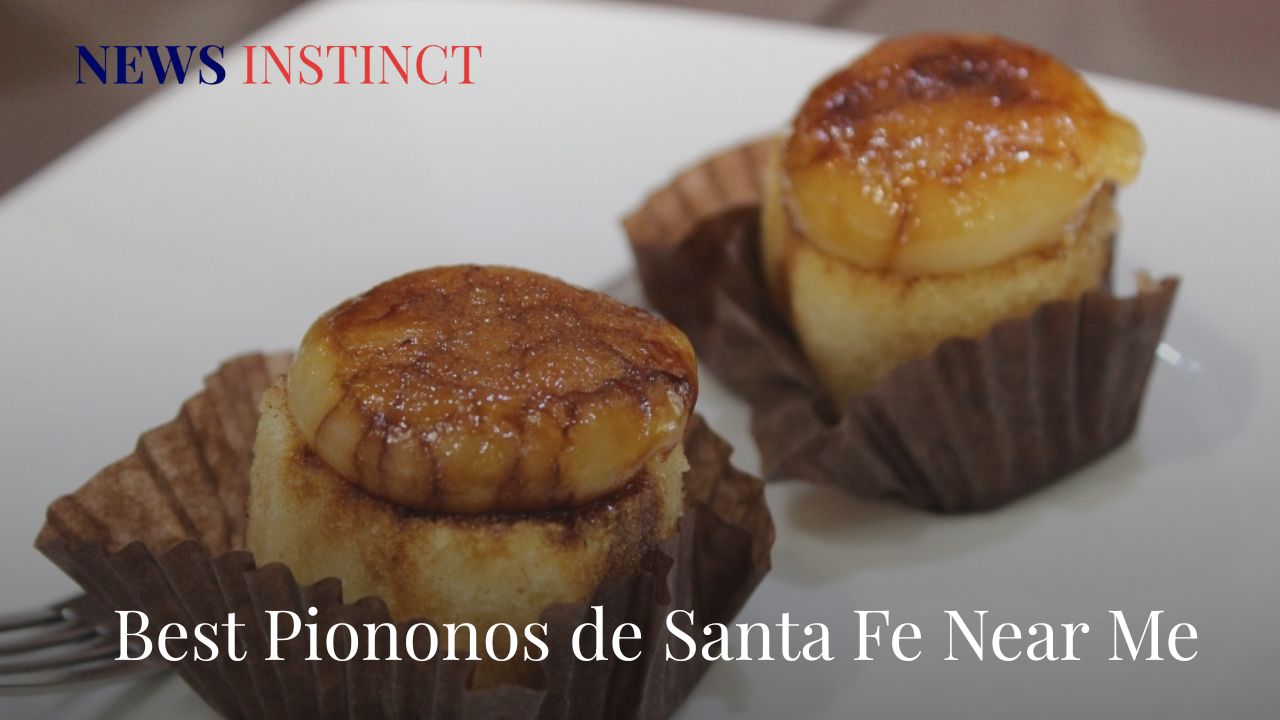
If you’ve typed “best piononos de Santa Fe near me” into a search bar, you’re chasing one of Spain’s most distinctive regional sweets. Piononos are tiny, syrup-soaked sponge cakes rolled into cylinders, filled with cinnamon-spiced pastry cream, and topped with a golden crown of toasted sugar. They come from Santa Fe, a small town just outside Granada in Andalusia, and they’ve been made there since 1897. The trouble is, they’re fiercely local. You won’t find them at most bakeries outside southern Spain, and even within Spain they’re uncommon beyond the Granada province.
This guide breaks down exactly what a real pionono is, the best places to eat one if you’re in Granada, how to track them down if you’re not, and what to look for so you don’t end up with an imitation.
What Is Best Piononos de Santa Fe Near Me?
A pionono is a small cylindrical cake, rarely more than a few centimetres tall. According to the most widely accepted account, pastry chef Ceferino Isla created it in 1897 at his bakery Casa Ysla on Calle Real in Santa Fe. He named the pastry after Pope Pius IX (Pío Nono in Italian), and the shape is meant to resemble the pope’s figure: the rolled sponge cake is the body, a folded paper cup serves as the white robes, and the dollop of toasted cream on top represents the papal skullcap.
The pastry itself has four distinct layers working together:
- A thin, flexible sponge cake, rolled tightly into a cylinder
- Sweet syrup that soaks the sponge until it’s moist but not soggy
- A filling of pastry cream flavoured with cinnamon (and sometimes a hint of lemon zest)
- A toasted cream crown on top, lightly caramelised like a miniature crème brûlée
The result is something that doesn’t taste like any other European pastry. It’s sweet, yes, but the cinnamon and syrup give it a warmth that reflects its Moorish heritage. The use of cinnamon and honey in sweets is a direct legacy of Al-Andalus, the centuries of Arab presence in southern Spain that shaped Andalusian cooking. According to one theory, the recipe’s ancestors may stretch back to the 10th or 11th century, though the modern form didn’t appear until Ceferino Isla’s era.
Tradition says you should eat a pionono in one bite. That’s ambitious. Two bites is more realistic.
Best Piononos de Santa Fe Near Me: Where to Find the Real Thing
Here’s the honest truth about searching for the best piononos de Santa Fe near me: if you’re not in Granada province, your options are limited. Piononos are a hyper-regional speciality. They don’t mass-produce well, they need to be eaten fresh, and most bakeries outside Andalusia simply don’t make them. That said, there are clear starting points depending on where you are and they also offers you various things including Best Coca de Recapte Near Me.
In Santa Fe: The Birthplace
Santa Fe sits roughly 15 minutes from Granada city by car, and it remains the best place on earth to eat a pionono. Two bakeries stand out.
Casa Ysla is the original. The Isla family has run this bakery for over five generations, and according to the Inmsol language school’s food guide, the operation now produces between 4,000 and 5,000 piononos daily. There are two locations in Santa Fe: a smaller branch on Calle Maestro Serrano (near the old town centre) and a larger modern café and restaurant on the A-92G road (Km 3.3) with its own car park. The roadside location is particularly convenient if you’re driving between Granada and the coast. A box of 12 piononos was recently listed at €12. Casa Ysla also sells chocolate, white chocolate, and tangerine variations alongside the classic version, plus a full cake (“tarta de piononos”) built from the same flavours. You can contact them at pionono.com or call +34 958 51 32 98.
Obrador Robles (sometimes listed as Piononos Robles) is a smaller artisan workshop in Santa Fe, known locally for its traditional approach. It appears on Tripadvisor’s Santa Fe bakery listings and maintains a Facebook page under Obrador Robles Piononos. It’s a good second stop if you want to compare styles.
Santa Fe itself is historically significant beyond pastries. This is where the Capitulations of Santa Fe were signed in 1492, the treaty that funded Christopher Columbus’s voyage to the Americas. The town also has a monument dedicated to the pionono, which tells you how seriously locals take this cake.
In Granada City: Best Piononos de Santa Fe Without the Drive
You don’t need to leave Granada to find a good pionono. Casa Ysla operates several branches across the city, including locations at Plaza Bib-Rambla, Calle Reyes Católicos, Carrera de la Virgen, Acera del Darro, Avenida de la Constitución, and Calle Méndez Núñez. The Plaza Bib-Rambla and Reyes Católicos shops are the most useful for visitors exploring the cathedral and central shopping streets.
Pastelería López-Mezquita is another strong option. Founded in 1862 on Calle Reyes Católicos, this is one of Granada’s oldest pastry shops, and its piononos get consistently positive reviews. One Tripadvisor reviewer called them “one of the best in Granada.” The shop also sells pastela (a Moorish chicken pie), empanadas, and an extensive range of traditional cakes. The atmosphere is old-school: tiled floors, glass display cases, and a small café area at the back. It scores 4.3 out of 5 on Google from over 450 reviews. Opening hours as of mid-2026 are roughly 9:30 a.m. to 8:30 p.m. on weekdays, with shorter hours on weekends.
La Crème de la Crème in the Realejo district is noted by Inmsol’s Granada food guide as a spot for modern, creative takes on the classic pionono, if you’re curious about contemporary interpretations.
Puerta Bernina is a Granada chain with multiple locations across the city. According to GranadaDigital, it’s known for a signature tarta de pionono con yogur (pionono cake with yoghurt), which puts its own spin on the traditional recipe.
How to Spot the Best Piononos de Santa Fe Near Me Outside Spain
If you’re searching for piononos from the UK, North America, or elsewhere, be realistic about what you’ll find. True Santa Fe-style piononos are rarely made outside Granada because the recipe requires specific technique, fresh pastry cream, and a delicate balance of syrup-to-sponge. They don’t travel or freeze especially well. Here’s what to try:
Search for Spanish bakeries near you. Use search phrases like “Spanish bakery near me,” “Andalusian pastries,” or “piononos de Santa Fe bakery.” A Mediterranean or European patisserie may stock them or make them on request. In London, for instance, there are numerous Spanish-owned bakeries and tapas restaurants that occasionally feature regional Andalusian sweets, though piononos specifically are rare.
Check online Spanish food retailers. Some Spanish gourmet shops ship frozen piononos. La Despensa de Marta (ladespensademarta.com), a Spanish online food retailer, has listed Casa Ysla piononos in boxes of 6 and 12, shipped frozen. Stock availability varies and international shipping may not always be offered, so check current listings before ordering.
Try making them at home. This is genuinely the most reliable route if you live far from Granada. The original Casa Ysla recipe is secret, but numerous Spanish food bloggers have published close approximations. The sponge cake takes about 7 to 8 minutes to bake, the pastry cream about 10 minutes to cook, and assembly roughly 15 to 20 minutes. You need eggs, sugar, flour, cornstarch for the cream, cinnamon, lemon zest, vanilla, and a kitchen blowtorch or grill to caramelise the top. Several tested recipes are available on sites like The Spanish Cook (thespanishcook.com) and Bake Street (bake-street.com).
[Internal Link: News Instinct article on traditional Spanish desserts you can make at home]
What Makes a Best Piononos de Santa Fe Near Me: Quality Checklist
Not all piononos are created equal. Here’s what separates a properly made one from a poor imitation.
| Quality Marker | What to Look For | Red Flags |
|---|---|---|
| Sponge texture | Moist, soft, and slightly springy from syrup absorption | Dry, crumbly, or soggy and collapsed |
| Shape | Small upright cylinder sitting in a paper cup | Flat, lopsided, or shaped like a muffin or cupcake |
| Cream top | Smooth, golden, lightly caramelised | Raw-looking, burnt, or missing entirely |
| Sweetness | Balanced: sweet but not cloying, with cinnamon warmth | Overwhelmingly sugary with no spice complexity |
| Freshness | Made the same day; cream should taste clean | Stale, dry edges; cream tastes sour or artificial |
| Cinnamon | Present and warm, not overpowering | Absent, or replaced with artificial flavouring |
The traditional pionono should be small enough that you could (theoretically) eat it in one bite. If it’s the size of a regular cupcake, you’re probably looking at a different pastry. Real piononos are typically around 5 cm tall and are served in small paper cases.
Best Piononos de Santa Fe Near Me: The “Near Me” Problem Explained
The reason searching for “best piononos de Santa Fe near me” can feel frustrating is that “near me” implies a widely available product, and piononos simply aren’t. They’re closer to Cornish pasties or Melton Mowbray pork pies in that regard: a product so tied to its place of origin that versions made elsewhere often miss the mark.
The word “pionono” itself adds confusion. According to Wikipedia, the name spread across the Spanish-speaking world, but each country developed its own version. Only the Santa Fe original is the small, upright, syrup-soaked pastry with caramelised cream.
If you see “piononos” on a menu at a Latin American restaurant, check whether it’s the Granada version or a South American or Caribbean style. They share a name and papal origins, but they’re completely different foods.
How to Eat a Pionono: Practical Tips
Pair it with coffee. Black coffee or a cortado is the traditional companion. The bitterness cuts through the sweetness of the syrup and cream. This is standard merienda (afternoon snack) fare across Granada.
Eat it the same day. Piononos are at their best within hours of being made. The sponge absorbs more syrup over time and can become too wet, while the cream loses its freshness. If you buy a box to take away, eat them within 24 hours and keep them refrigerated.
Start with the classic. If you’re tasting piononos for the first time, order the traditional version before trying chocolate, tangerine, or fruit variations. The classic lets you assess the sponge, syrup, cinnamon, and cream in their intended balance.
Buy them as gifts. Boxes of piononos are one of the most popular souvenirs from Granada. Casa Ysla sells them in boxes of 6 and 12 at the bakery and at Granada airport, and locals regularly bring them to family gatherings and celebrations.
Brief History of the Pionono
The timeline runs like this:
- 1854: Pope Pius IX proclaims the dogma of the Immaculate Conception of Mary.
- 1897: Ceferino Isla, a devout pastry chef in Santa Fe, creates the pionono as a tribute to the pope. He opens Casa Ysla on Calle Real.
- 1916: Pedro Galatino presents piononos to King Alfonso XIII, who reportedly enjoyed them so much that he granted Casa Ysla the title of official supplier to the Royal House. The royal five-pointed crown was added to the bakery’s logo.
- During the Spanish Republic: The royal crown was removed from the logo for political reasons, then later restored.
- Present day: Casa Ysla continues under the Isla family’s direction, now in its fifth generation. Production stands at an estimated 4,000 to 5,000 piononos per day, according to Inmsol’s Granada food guide.
There’s also a competing origin theory: that three sisters from a Santa Fe pastry shop called La Blanquita rescued an older recipe with Moorish roots in the mid-19th century, shaping it into the papal tiara form before Ceferino Isla refined it into the modern pionono. According to Bake Street, this theory suggests the recipe’s ancestors were part of the Arab culinary heritage preserved by Santa Fe’s residents.
Whatever the exact origin, the pastry has become so embedded in Granada’s identity that Santa Fe erected a public monument to it.
FAQ’S About Best Piononos de Santa Fe Near Me
1. Where can I buy piononos de Santa Fe online?
Some Spanish gourmet food retailers ship frozen piononos, including La Despensa de Marta. Availability changes frequently. Casa Ysla’s own website (pionono.com) handles orders for in-store collection across their branches but does not appear to offer direct international delivery as of mid-2026. Check current listings before ordering.
2. How long do piononos stay fresh?
They’re best eaten on the day they’re made. Refrigerated, they’ll keep for up to three days in an airtight container, but the texture and flavour decline noticeably after the first 24 hours.
3. Are piononos gluten-free?
The sponge cake contains flour, so traditional piononos are not gluten-free. The pastry cream filling is typically thickened with cornstarch (which is gluten-free), but the overall pastry is not suitable for anyone avoiding gluten.
4. What’s the difference between a pionono de Santa Fe and a South American pionono?
They share a name but are different foods. The Santa Fe version is a small, upright, syrup-soaked sponge cake with caramelised cream on top. Argentine piononos are large, flat rolled cakes with sweet or savoury fillings. Puerto Rican piononos use fried plantain as the outer layer with a meat filling.
5. Can I make piononos at home?
Yes. The original recipe is a Casa Ysla trade secret, but approximations are widely available from food bloggers. You’ll need a thin sponge cake, sugar syrup, pastry cream with cinnamon, and a blowtorch or grill for the caramelised top. The total active time is roughly 45 minutes, plus cooling.
6. How much do piononos cost in Granada?
At Casa Ysla in Santa Fe, a box of 12 was recently priced at around €12 (roughly £10). Individual piononos at cafés and bakeries typically cost €1 to €1.50 each.