

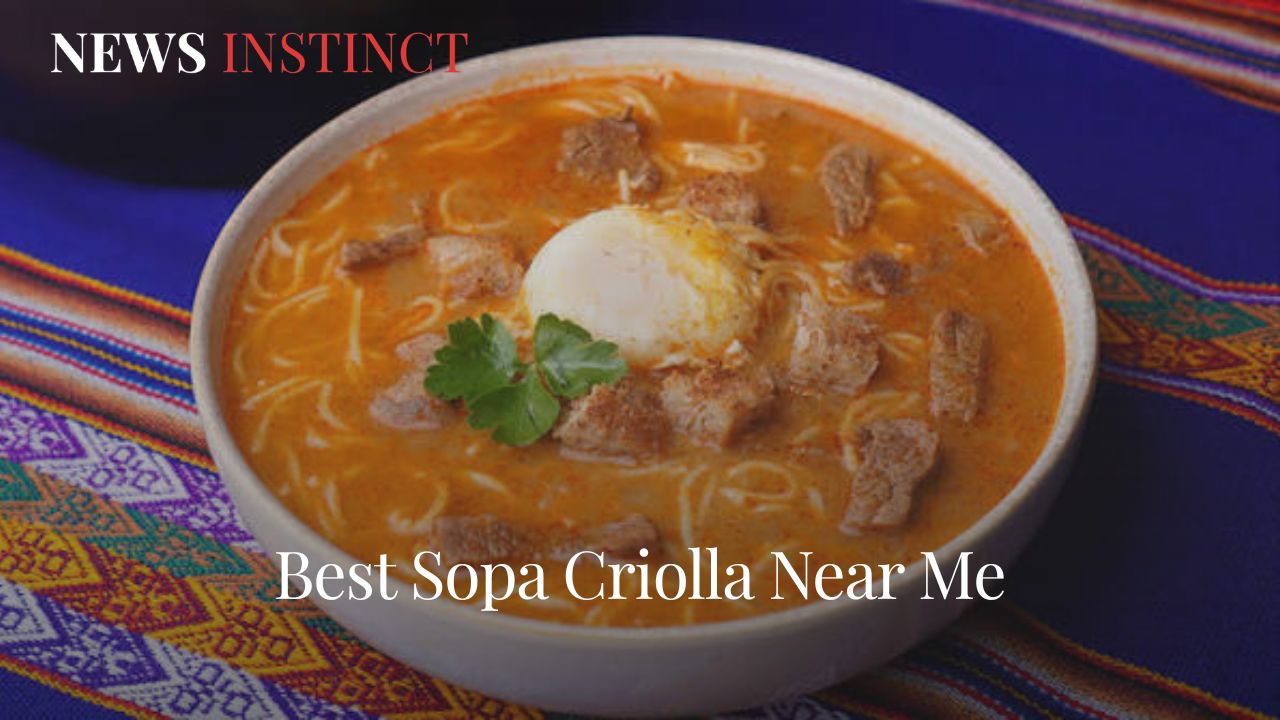
If you’ve ever searched “best sopa criolla near me” after tasting this Peruvian beef noodle soup for the first time, you already know it’s the kind of dish that stays with you. Rich, warming, slightly creamy and smoky, sopa criolla is Peru’s answer to chicken soup: the thing you crave on a grey Tuesday evening or after a long week. The good news is that Peruvian cuisine is growing fast in the UK, with South American flavours named as one of the top food trends for 2026 by Bidfood’s annual UK consumer survey. The trickier part is separating the genuinely good bowls from the forgettable ones. This guide will help you do that.
You’ll learn what sopa criolla actually is, which ingredients separate an authentic version from a watered down imitation, how to search for the best sopa criolla near me using the right tools, and what to do if you can’t find it at a restaurant and want to make it yourself.
What Is Best Sopa Criolla Near Me & Why Is It Worth Searching For?
Sopa criolla (sometimes written sopa a la criolla) translates loosely as “creole soup.” It belongs to a category of Peruvian cooking called comida criolla, which developed during the Spanish colonial period and drew on Indigenous Andean, Spanish, Italian, African, and Chinese culinary traditions over the centuries. According to Cravings Journal, the soup itself evolved from chupi, a traditional Andean broth, blended with Western ingredients like pasta and milk that arrived with European settlers. The angel hair noodles that define the dish are widely attributed to Italian immigrants who came to coastal Peru in the 19th and 20th centuries, according to food historian sources at LimaEasy.
What you get in the bowl is deceptively simple. Thin strips or small cubes of beef are seared until golden, then built into a sofrito of sautéed onions, garlic, and tomato. The broth picks up its smoky reddish colour and gentle warmth from ají panca, a mild Peruvian chilli pepper that’s closer to paprika than it is to a scotch bonnet. Thin vermicelli or angel hair pasta cooks directly in the broth. A splash of evaporated milk goes in near the end, giving the whole thing a silky, rounded finish. The traditional garnish is a fried or poached egg set right on top, its runny yolk mixing into the broth as you break it.
Peruvians eat it for lunch, after late nights, on cold days, and often as a full meal rather than a starter. It has a reputation in Lima as a hangover cure, though its appeal goes well beyond that. Plus must try Best Masaco Banana Near Me.
Best Sopa Criolla Near Me: How to Actually Find It
The phrase best sopa criolla near me generates a lot of searches, but the honest truth is that no search engine can tell you exactly where the best bowl is sitting right now. What it can do is point you toward restaurants that are most likely to serve a good one. Here’s how to search smarter.
Start With Peruvian Restaurants, Not Latin American Ones
A dedicated Peruvian kitchen is far more likely to prepare sopa criolla properly than a restaurant billing itself as broadly “Latin American” or “South American.” The reason is straightforward: sopa criolla relies on ají panca, a chilli paste that most non-Peruvian kitchens simply don’t stock. Without it, the soup loses its smoky depth and just tastes like a generic tomato and beef noodle broth.
Look for restaurants that also serve lomo saltado, ají de gallina, causa, anticuchos, and arroz chaufa. A broad Peruvian menu suggests the kitchen has real grounding in the cuisine, not just a single borrowed dish to fill a gap.
Use Google Maps and Review Platforms Strategically
Google Maps remains one of the most effective tools for finding the best sopa criolla near me. Try these approaches:
Search “Peruvian restaurant near me” first, then check individual menus. Many restaurants now upload their full menus to Google Business profiles.
Read Google Reviews and TripAdvisor reviews with the search function set to “sopa criolla” or “soup.” Diners frequently mention specific dishes. Filter by recent reviews, as menus and kitchen quality shift over time.
Check photos uploaded by customers. A bowl of sopa criolla should have a reddish broth (from the ají panca and tomato), visible noodles, and often an egg sitting on top. If you see a pale, thin broth with no colour, that’s a red flag.
Check Social Media for Smaller Restaurants
Instagram and TikTok have become genuinely useful for food discovery, especially for independent and family run Peruvian restaurants. Search location tagged posts or hashtags like #sopacriolla, #peruvianfooduk, or #comidarriolla alongside your city name. Smaller establishments that cater mainly to the local Peruvian community often serve the most traditional versions, but they don’t always rank well on mainstream search platforms.
Cities With the Best Options in the UK
London has the widest selection of Peruvian restaurants in Britain. The Elephant and Castle area has long been a hub for the Latin American community, with shops like Mercado Latino, Chatica, and DistriAndina stocking Peruvian staples. You’ll find Peruvian restaurants scattered across Soho, Fitzrovia, Shoreditch, Islington, and south London.
Manchester, Birmingham, and parts of the West Midlands also have growing Peruvian food scenes, though options are more limited outside the capital. If you’re in a smaller city or town, your best bet may be to search for Peruvian pop ups, food market stalls, or catering services that operate at weekends.
How to Spot an Authentic Bowl of Sopa Criolla
Not every bowl labelled sopa criolla on a menu will live up to the name. Here’s what to look for and what to avoid.
Signs of a Good Sopa Criolla
The broth should have a warm reddish or orange tone, a sign that ají panca has been used rather than just plain tomato paste. It should smell savoury and lightly smoky when it arrives at the table.
The beef should be tender and easy to eat. Tough, chewy meat suggests the kitchen rushed the cooking.
The noodles should be soft but not dissolving into mush. A good kitchen adds the angel hair pasta at the very end, since it only takes two or three minutes to cook.
Evaporated milk should be present but not overpowering. You’re looking for a creamy finish, not a milky soup. The balance between tomato acidity, ají warmth, and milk richness is what makes a great sopa criolla.
A fried or poached egg on top is traditional and adds another layer of richness. Not every restaurant includes one, but its presence is a positive sign.
Warning Signs
A pale, watery broth with no colour or smokiness suggests the kitchen skipped the ají panca entirely. If the soup tastes like a basic minestrone with beef, that’s not sopa criolla.
An overly thick, starchy texture can mean the noodles were left sitting in the broth too long. A good kitchen either cooks them fresh per order or keeps them separate until serving.
Menus that list sopa criolla as the only Peruvian dish on an otherwise generic Latin American menu should make you cautious. It could be excellent. It could also be a token inclusion.
Sopa Criolla vs Sopa a la Minuta: What’s the Difference?
You may see both names on Peruvian menus, and even Peruvian chefs don’t fully agree on whether these are the same dish or two separate recipes. According to LimaEasy, the debate has never been settled.
The most common distinction is that sopa a la minuta (“minute soup”) uses ground beef and is designed to be made very quickly, while sopa criolla uses diced or sliced lean beef and takes a bit more time to build flavour. Some cooks add tomatoes to one version but not the other. Others consider evaporated milk the dividing line.
For your purposes as a diner, both are worth ordering if they’re on the menu. Ask the server what goes into theirs and you’ll get a sense of whether the kitchen knows its way around the dish.
Key Ingredients That Define Sopa Criolla
Understanding what goes into the soup helps you evaluate what’s in your bowl. Here’s what a traditional version includes:
| Ingredient | Role in the Dish |
|---|---|
| Lean beef (diced or strips) | Protein base; should be seared for flavour |
| Red onion | Part of the sofrito; adds sweetness |
| Garlic | Aromatic depth |
| Tomato paste or fresh tomatoes | Colour and body |
| Ají panca paste | Smoky warmth and the soup’s signature reddish tone |
| Angel hair pasta (vermicelli) | Texture; cooks in the broth |
| Evaporated milk | Creamy finish without heaviness |
| Beef stock or water | Broth base |
| Oregano and cumin | Traditional seasoning |
| Egg (fried or poached) | Garnish; adds richness |
Ají panca is the ingredient that makes or breaks the dish. It’s a mild, dark red Peruvian chilli with a smoky, slightly fruity flavour. Sous Chef UK describes it as having berry like notes and gentle heat, nothing like a fiery hot sauce. If a restaurant uses ají panca properly, you’ll taste it immediately in the broth’s warmth and colour. Without it, you’re eating a different soup.
Can’t Find It Nearby? Make Sopa Criolla at Home
If your search for the best sopa criolla near me comes up empty, it’s worth knowing that this is one of the simpler Peruvian dishes to recreate at home. The ingredient list is short, and most items are available in UK supermarkets. The one speciality purchase you’ll need is ají panca paste.
Where to Buy Ají Panca in the UK
You can find ají panca paste from several UK based suppliers. Sous Chef (souschef.co.uk) sells the Chatica brand for around £4 to £5 per jar. Mexgrocer (mexgrocer.co.uk) stocks the same product. Amazon UK carries Inca’s Food brand ají panca, though prices are higher (around £20 to £23 per jar due to import costs). If you’re in London, Latin American grocery shops in Elephant and Castle, Seven Sisters, and along Old Kent Road carry it in store for less than online prices.
Sol Andino, a UK based Latin American food distributor, sells its own ají panca paste (212g) online and through independent shops.
A Quick Overview of the Method
The process follows a logical sequence. You sear the beef in batches to get colour and flavour. Then build a sofrito by sautéing onion, garlic, and oregano in the same pot. Stir in tomato paste and ají panca paste until it forms a thick, fragrant base. Return the beef, pour in the stock, and simmer until the meat is tender. Add the angel hair pasta and cook for two to three minutes until just done. Stir in evaporated milk. Serve with a fried or poached egg on top and fresh herbs.
One tip from traditional Peruvian cooks: keep the noodles separate if you’re not eating the entire batch immediately. The pasta absorbs liquid and turns mushy if it sits in the broth.
Why Peruvian Food Is Getting Easier to Find in the UK
Your chances of finding the best sopa criolla near me are better now than they were five years ago. The global Peruvian restaurant market was valued at $8.4 billion in 2025 and is projected to reach $15.6 billion by 2034, growing at a compound annual growth rate of 7.1%, according to a March 2026 report from MarketIntelo. As of that same report, more than 4,800 Peruvian restaurants operate across over 60 countries, with new openings accelerating.
Peru itself continues to collect international food awards. The country won the Condé Nast Traveller UK Readers’ Choice Award for Best Countries for Food in 2025, according to Promperu. Lima’s restaurant Central was named the world’s best restaurant in 2023, and Maido took the top spot in 2025, according to The World’s 50 Best Restaurants list.
In the UK specifically, Bidfood’s 2026 Food and Drink Trends report identified South American cuisines (including Peruvian) as one of the year’s top emerging trends, driven by consumers looking for bold flavours and less familiar cuisines. LIMA in Fitzrovia, which earned the first Michelin star for a Peruvian restaurant in Europe back in 2013, remains a London benchmark. Under new head chef Diego Recarte (appointed October 2025), the restaurant continues to serve refined Peruvian dishes, though its focus is more contemporary tasting menu than home style sopa criolla.
For a more traditional bowl, smaller family run Peruvian restaurants and weekend pop ups in areas with established Latin American communities are typically your best bet.
FAQ’S About Best Sopa Criolla Near Me
1. Is sopa criolla spicy?
Not typically. The main chilli used is ají panca, which has a mild, smoky flavour rather than strong heat. Most bowls have gentle warmth rather than anything close to spicy. Some restaurants offer ají sauce on the side for those who want more kick.
2. Is sopa criolla gluten free?
No, the standard recipe contains angel hair pasta (wheat based noodles). If you need a gluten free version, you’d have to ask the restaurant to substitute the noodles, which isn’t always possible, or make it at home with a gluten free pasta alternative.
3. What time of day do Peruvians eat sopa criolla?
It’s traditionally a lunch dish in Peru, though it’s also popular for dinner and famously eaten as a late night or early morning restorative. In UK restaurants, you’re most likely to find it served at lunch and dinner.
4. How much does sopa criolla cost in UK restaurants?
Prices vary, but expect to pay between £8 and £15 for a bowl at most independent Peruvian restaurants. Higher end restaurants may charge more if they serve a refined version.
5. Can I order sopa criolla on delivery apps? If a Peruvian restaurant near you is listed on Deliveroo, Uber Eats, or Just Eat, there’s a reasonable chance sopa criolla will be on the delivery menu. Soups travel reasonably well as long as the noodles and broth are packed separately. Check the packaging notes in reviews before ordering.